

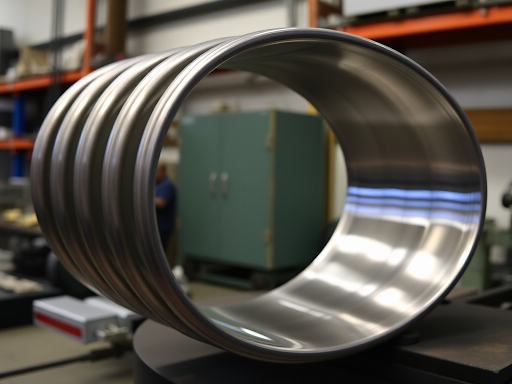
Walk through any fabrication space and you’ll notice how much effort goes into keeping things straight. Lines, tolerances, alignments, measurements. Then you come across the curved sections, and the logic shifts. Those curves exist because straight pieces were no longer enough. That transition is where a tube bender becomes less about machinery and more about managing compromise.
Bending introduces uncertainty into systems built on precision. Metal does not respond to force in perfectly obedient ways. It stretches where it’s pulled, compresses where it’s constrained, and remembers enough of its former shape to push back when the pressure is released. What looks like a simple arc on a drawing is often the product of several quiet adjustments.
Why Bending Challenges Repeatability
Repeatability is straightforward when inputs stay constant. Tube bending complicates that because the inputs rarely do. Even batches from the same supplier can vary subtly. Wall thickness drifts. Surface condition changes. Material hardness shifts over time or storage conditions.
These differences show up during bending. One tube springs back slightly more than the last. Another shows early signs of flattening. Machines compensate through tooling geometry and control systems, but those systems rely on assumptions. When reality departs from those assumptions, outcomes change.
This is why operators often trust their hands and eyes as much as readouts. Resistance during the pull, sound, and even vibration can signal that something isn’t behaving as expected long before a defect becomes visible.
Curves Expose Design Intent
Curved components are rarely decorative accidents. They usually exist to solve problems, avoid obstructions, absorb movement, or fit within constrained spaces. That means tolerances often matter more than they first appear.
In fluid systems, internal deformation affects flow. In structural applications, a slight flattening can change load behaviour. In visible assemblies, surface marking can undermine the finished appearance. Each application prioritises different outcomes, which in turn shapes how bending is approached.
This is where standard settings fall short. A setup that works for one job may be unsuitable for another, even if the dimensions look similar. Adjustments are often incremental, guided by trial, inspection, and experience.
Tooling Decisions Carry Long Consequences
Tooling choices define how stress is distributed during the bend. Radius selection, support method, and clamping pressure all influence whether the tube flows smoothly or fights the process. Once the bend begins, there’s little opportunity to correct mistakes.
Mandrels support internal walls but introduce friction and complexity. Tighter radii demand more control. Thinner materials reduce margin for error. Each decision narrows or widens the window for acceptable results.
Because of this, experienced fabricators tend to invest more time in setup than execution. When the setup is right, production runs quietly. When it isn’t, defects multiply quickly.
Where Precision Meets Judgement
Despite advances in automation, tube bending still resists full standardisation. Machines can apply force accurately, but they can’t always interpret why material behaves differently from expectation.
That interpretation remains human. It lives in adjustments made between cycles, in decisions to slow down, change tooling, or rethink sequence. Curved components carry that history within them. They look smooth when done well, but the process behind them is rarely simple.
Bending isn’t just about changing shape. It’s about understanding how material responds when asked to do something it naturally resists.
