

What Is Fascisterne?
Fascisterne is a term that carries historical weight, emotional intensity, and a strong political warning. The word, which is the Danish plural definite form of “fascist,” literally means “the fascists.” However, it’s far more than a translation. When people refer to fascisterne, they invoke a dark legacy of authoritarianism, nationalism, and brutality. From the brutal regimes of Mussolini in Italy to Hitler’s Nazi Germany and collaborators across Europe, fascisterne represents those who supported or enforced fascist ideologies.
These ideologies are built on the destruction of democracy, the silencing of opposition, and the glorification of a single national or ethnic identity above all others. The term fascisterne is especially potent in Danish history, where it refers not only to foreign regimes but to local collaborators who sided with the Nazis during WWII.
This article explores fascisterne in great depth—its etymology, historical background, ideology, key figures, modern-day relevance, and the lessons it teaches us about resisting authoritarianism in today’s world. Understanding fascisterne is not just about remembering the past; it’s about protecting the future.
Etymology and Meaning of Fascisterne
The word fascisterne stems from the root “fascist,” derived from the Italian word “fascio,” which means a bundle or group, symbolizing unity and strength. In Danish grammar, “fascist” becomes “fascister” in plural form and “fascisterne” when referring to a specific group—hence, “the fascists.” Originally used in Italy to name Mussolini’s political movement in the early 20th century, the term quickly spread across Europe. It became associated with regimes that emphasized centralized authoritarian leadership, militarism, suppression of dissent, and ultra-nationalism.
But in cultural and historical contexts, especially in Denmark and other parts of Europe, fascisterne is not a neutral descriptor. It evokes moral condemnation. In Denmark, it is often used to describe those who collaborated with Nazi occupiers during World War II. These individuals are remembered not only for political alignment but for betrayal of democratic values and national integrity. The term thus functions as both a linguistic identifier and a symbolic marker of political infamy.
Historical Origins of Fascism
The rise of fascisterne cannot be understood without examining the historical emergence of fascism itself. After World War I, Europe was in ruins—economically shattered, socially fragmented, and politically disillusioned. People lost faith in traditional democratic systems, which seemed incapable of addressing unemployment, inflation, and national humiliation. In this climate of fear and frustration, radical ideologies found fertile ground. Fascism was born in Italy in 1922, when Benito Mussolini capitalized on public unrest and promised national revival through strong leadership.
He presented fascism as a “third way,” rejecting both capitalism and communism. It combined intense nationalism, hatred for liberal democracy, militarism, and glorification of the state. Hitler’s Nazism in Germany took these ideas further by adding racial purity and anti-Semitism to the equation. Spain, under Franco, Hungary under the Arrow Cross, and Romania under the Iron Guard all developed their own versions of fascism. In each country, fascisterne emerged as local enforcers, ideologues, or sympathizers who helped consolidate these brutal regimes. The core pattern was always the same: disillusionment created space for authoritarianism to flourish.
Fascisterne in Denmark During WWII
During World War II, Denmark was occupied by Nazi Germany from 1940 to 1945. While many Danes resisted occupation through underground movements and civil disobedience, a minority actively collaborated with the Nazis. These individuals, known as fascisterne in Danish memory, supported totalitarian rule, betrayed democratic principles, and often assisted in persecution of minorities. Some joined the National Socialist Workers’ Party of Denmark (DNSAP), while others volunteered to fight for Germany on the Eastern Front.
After the war, the term fascisterne became synonymous with betrayal. Many collaborators were put on trial or ostracized from society. The collective trauma of occupation and the memory of those who aided the enemy shaped national identity and democratic values in post-war Denmark. The story of Danish fascisterne serves as a microcosm of the broader European struggle between democracy and totalitarianism.
Core Beliefs and Ideology of Fascisterne
The ideology of fascisterne is built on several disturbing yet consistent foundations. First and foremost is ultra-nationalism, the belief that the nation, often defined by race or culture, must be glorified above all else. This creates a black-and-white worldview: insiders versus outsiders, patriots versus traitors. Secondly, fascisterne believe in authoritarianism—a single leader or party must control the state without interference from courts, legislatures, or the media. Democracy is viewed as weak and chaotic.
Militarism is another central pillar. Fascisterne glorify violence, uniforms, discipline, and war as means of national rebirth. War is not feared—it is embraced. Fascisterne also practices the suppression of dissent. Any opposing voices are labeled enemies of the state and are silenced through censorship, imprisonment, or worse. Finally, fascisterne prioritize the state over the individual. Personal freedoms, civil liberties, and human rights are considered expendable in service to the nation. Education, art, and culture are all repurposed as tools for indoctrination.
How Fascisterne Gained and Maintained Power
Fascisterne used both democratic and violent means to gain power. In many cases, they rose through elections by exploiting economic crises and public fear. Once in office, they quickly dismantled democratic systems through legal manipulation. In Germany, Hitler used the Reichstag Fire Decree and Enabling Act to eliminate opposition. Similar tactics were employed elsewhere. Propaganda played a massive role. Fascisterne controlled media outlets, rewrote textbooks, and filled public spaces with slogans, posters, and radio broadcasts. They created a cult of personality around their leaders, portraying them as saviors.
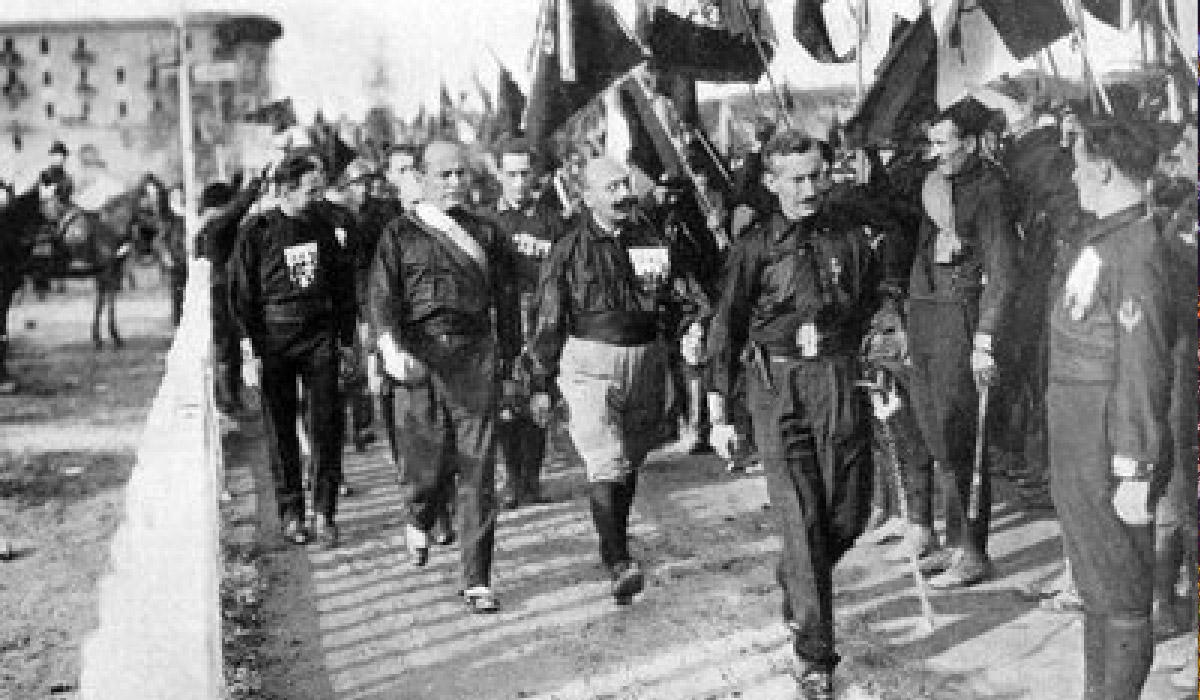
Paramilitary forces like Mussolini’s Blackshirts and Hitler’s Brownshirts enforced ideology through street violence and intimidation. Citizens who resisted were imprisoned or killed. Surveillance systems created widespread paranoia, making people afraid to speak freely—even in their own homes. In short, fascisterne didn’t just use violence; they used law, fear, and lies to stay in power.
Key Figures Behind Fascisterne Movements
The three most influential figures in the history of fascisterne are Benito Mussolini, Adolf Hitler, and Giovanni Gentile. Mussolini, the founder of Italian fascism, envisioned a revival of Roman glory through a centralized authoritarian state. He pioneered the corporatist economic model and used propaganda and violence to create a one-party regime. Hitler, building on Mussolini’s example, added racial purity to the fascist doctrine. He believed in the superiority of the Aryan race and orchestrated the Holocaust, killing six million Jews and millions of others.
Hitler’s regime is the most destructive example of fascisterne in history. Gentile, often called the philosopher of fascism, provided the ideological justification for the fascist state. He argued that the individual only finds meaning through the state, and that the state should mold its citizens in its image. These men shaped the political, moral, and intellectual foundations of fascisterne.
The Consequences of Fascisterne Rule
The rule of fascisterne had devastating consequences. At the human level, it led to genocide, mass murder, and brutal repression. The Holocaust remains the most horrifying example, but other atrocities occurred across fascist regimes, including ethnic cleansing, torture, and forced labor. Internationally, fascisterne caused wars of aggression, most notably World War II, which killed over 70 million people. Their expansionist ideologies led to invasions, occupations, and prolonged conflict. On the societal level, fascisterne dismantled civil liberties and democratic institutions.
Freedom of speech, religion, and assembly vanished. Education systems were turned into indoctrination tools, and art was censored or destroyed. Economically, fascist states often implemented corporatist systems that stifled innovation and bred corruption. With all power centralized, there were no checks or accountability. The long-term effects included institutional collapse, moral trauma, and a legacy of division.
Modern-Day Echoes of Fascisterne
Although classic fascist regimes were defeated, the ideas behind fascisterne still resonate in today’s world. Nationalist populism has risen in many countries, with leaders using language that mirrors past fascist rhetoric—targeting immigrants, glorifying the nation, and undermining democratic norms. Cults of personality are once again forming around political figures who position themselves as sole protectors of the nation. These figures often attack the press, judiciary, and minorities.
Social media has become a powerful tool for spreading fascisterne-style propaganda. Platforms like Facebook, Twitter, and Telegram enable echo chambers where misinformation spreads unchecked. Hate groups use these tools to recruit, organize, and intimidate. Paramilitary groups and street-level violence are also making a comeback in some regions, often with state tolerance or even encouragement. These developments show that fascisterne is not just a historical term—it is a warning sign for today.
Media’s Role in Fascisterne Rise and Fall
Media has always played a central role in the rise and fall of fascisterne. Fascist regimes used newspapers, film, radio, and posters to shape public opinion. They created compelling narratives that painted enemies as evil and leaders as divine. Today, the media landscape is more fragmented but still powerful. Algorithmic bias on social platforms can amplify hate speech and falsehoods, recreating the echo chambers of the past in digital form.
At the same time, independent journalism is crucial for exposing authoritarian trends. Whistleblowers, investigative reporters, and fact-checkers help counteract fascisterne narratives. Media literacy is essential; societies must teach people how to question sources, identify bias, and resist manipulation. In the information age, the fight against fascism is also a fight for truth.
How to Recognize Fascist Patterns Today
Understanding the signs of fascisterne is vital for democratic health. One-party rule is a major red flag; when governments eliminate political opposition or manipulate elections, democracy is at risk. Suppression of the media is another sign—attacks on journalists, censorship, and disinformation campaigns are tools of control. Scapegoating minorities, whether immigrants, religious groups, or political dissidents, is a core tactic. Militaristic imagery—uniforms, parades, and slogans—often signal fascist ideology.
Emotional nationalism that demands absolute loyalty and vilifies critics is another hallmark. Finally, when leaders become untouchable, idolized, and insulated from criticism, they often take steps toward fascism. Recognizing these signs early allows societies to defend against a return of fascisterne.
Lessons from History: Preventing Another Rise
History shows that fascisterne can rise quickly in times of crisis, but societies can protect themselves through education, civic engagement, strong institutions, and global cooperation. Education is the first defense. Schools must teach the history of fascism, including local examples like the Danish collaborators. Museums, documentaries, and literature can keep memory alive.
Civic engagement—voting, protesting, and participating in public discourse—helps maintain democratic culture. Institutions like courts, free media, and watchdog organizations provide checks and balances. Globally, cooperation through human rights charters and international law creates standards that discourage authoritarianism. Together, these efforts create a resilient society capable of resisting fascisterne.
Conclusion
Fascisterne represents one of the darkest chapters in human history—but also one of the most important lessons. It teaches us what happens when fear, hatred, and unchecked power replace dialogue, diversity, and democracy. From Mussolini’s Italy to today’s digital echo chambers, the tactics remain disturbingly similar. Recognizing the patterns, remembering the victims, and resisting the ideologies are not just moral duties—they are necessary acts of civic survival. In remembering fascisterne, we preserve our freedoms and honor those who fought for them. The past is not dead, and if we forget its warnings, it may repeat. Stay aware. Stay active.
FAQs
What does the word “Fascisterne” mean?
Fascisterne is a Danish word that means “the fascists” in English. It refers to people who support fascism—a political system where one leader or group controls everything, often taking away freedom of speech and punishing people with different opinions.
Who were the Fascisterne in Denmark during World War II?
During World War II, fascisterne in Denmark were people who supported the Nazis or helped the German occupation. Some joined pro-Nazi groups or worked with the enemy, and after the war, many of them were punished or rejected by Danish society.
What are the main beliefs of Fascisterne?
Fascisterne believed in extreme nationalism, strong leadership, and total control of society. They rejected democracy, limited people’s rights, used violence to stay in power, and often blamed minorities for the country’s problems.
Are there signs of Fascisterne thinking today?
Yes, some modern political groups show signs of fascisterne ideas by promoting hate, spreading false news, attacking journalists, and targeting minorities. These patterns can be warning signs of rising authoritarianism.
Why is it important to learn about Fascisterne today?
Learning about fascisterne helps us protect freedom and democracy. By understanding how fascist ideas grew in the past, we can spot them early and stop them from spreading again in today’s world.
More Amazing Stories And Biographies Visit Techreels
